Home Composting Guide
By composting your food and garden waste, you can:
- reduce your waste going to landfill
- make a positive impact on climate change
- improve the health of your soil by enriching it with organic matter and nutrients.
It’s best to keep food and garden waste out of our rubbish bins, where it will end up in landfill. Conditions in landfill aren’t right for organic waste to break down into compost; instead it rots, and produces methane (a greenhouse gas). It also contributes to making toxic leachate, which can contaminate our environment.
If home composting isn’t for you, there are other options to ensure your food or garden waste is composted.
Compost recipe
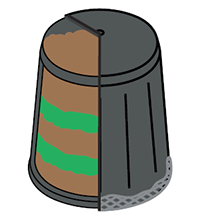
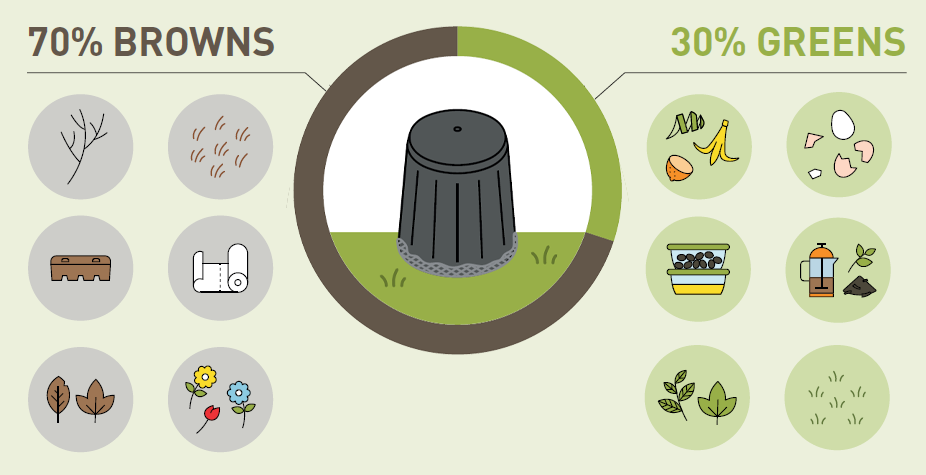
It’s important to get the balance of greens and browns right. When you add food waste/Bokashi solids or lawn clippings to your compost, try to alternate with browns/dry materials. Otherwise your compost pile may go anaerobic, and become a smelly sludge. Think of your compost as a sandwich, where browns are the bread and greens are the filling.
Feeding your compost
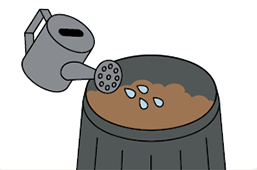
Keep feeding your compost 30 percent greens and 70 percent browns. This will help build up heat to speed up the composting. Compost should be moist like a sponge; add water to the dry material, cover to trap moisture, and make sure there is plenty of air flow. Turning your compost will speed up the composting process, but isn’t essential.
What to add
30 percent greens: anything soft, fresh, and nitrogen rich:
- chopped fruit and veggie scraps
- eggshells
- cooked veggie leftovers
- coffee grounds, tea leaves and tea bags
- fresh garden waste
- fresh grass clippings.
70 percent browns: anything brown, brittle and carbon rich:
- small twigs
- dried brown grass clippings
- cardboard and certified home compostable packaging
- paper towels
- dry leaves and garden waste
- indoor cut flowers.
What not to add
Noxious weeds, dog and cat faeces (manure from grass-eating animals is fine), oil and other liquids, cooked and/or processed foods (eg, bread, pasta and meat – unless it has been treated with Bokashi first).
Harvest time
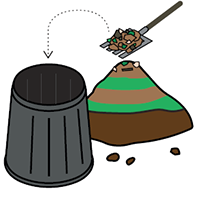
Compost is ready to harvest when it becomes dark and crumbly and you cannot identify the original materials in it. This normally takes 6–9 months. Harvest the bottom third of composted material by removing the bin. With a garden fork, take the top two-thirds of semi-composted material and place it back in the bin. This will leave a pile of good quality compost to spread over your garden.
Your health and safety
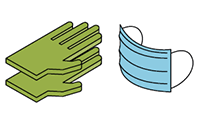
Compost can contain micro-organisms such as Legionella, which can cause serious illness. We advise you wear a face mask and/or avoid breathing in vapour if the compost is steaming. Always wear gloves when handling compost, and wash your hands afterwards.
Troubleshooting
Some common composting problems, and how to fix them.
| Problem | Solution |
| Not breaking down | Your compost is probably too dry. Mix it with a garden fork while adding water. |
| Smelly or slimy | Your compost is either too wet, lacking browns, or needs air. Mix it up and add some browns (scrunched up newspaper or torn cardboard work well). Add a sprinkle of garden lime. |
| Flies | Don’t add meat scraps or cooked food. Cover food with a thick layer of browns. |
| Rodents | Don’t add meat, cooked or processed foods. Make sure your compost is hot by adding the right balance of browns and greens, water and air. If rodents persist you can rat-proof your bin:place your compost bin on a base of fine wire netting that extends 10cm beyond its edgebend the netting up around your compost bin and tie on with cable tiespush the wire netting into the air holes as a barrier, which still allows for air circulation.OR stop adding food waste to your compost bin – use a Bokashi bin or worm farm instead (adding food waste that has been “pickled” by bokashi is fine). |