Benefits of Worm Fertiliser
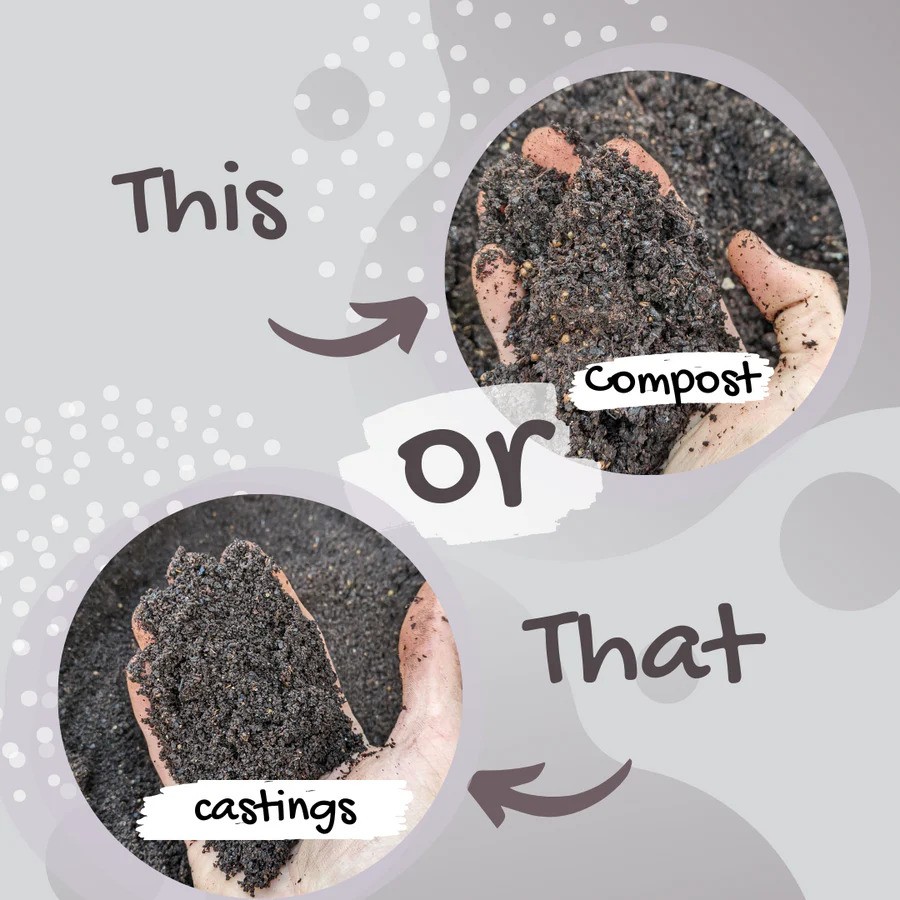
Worm Castings
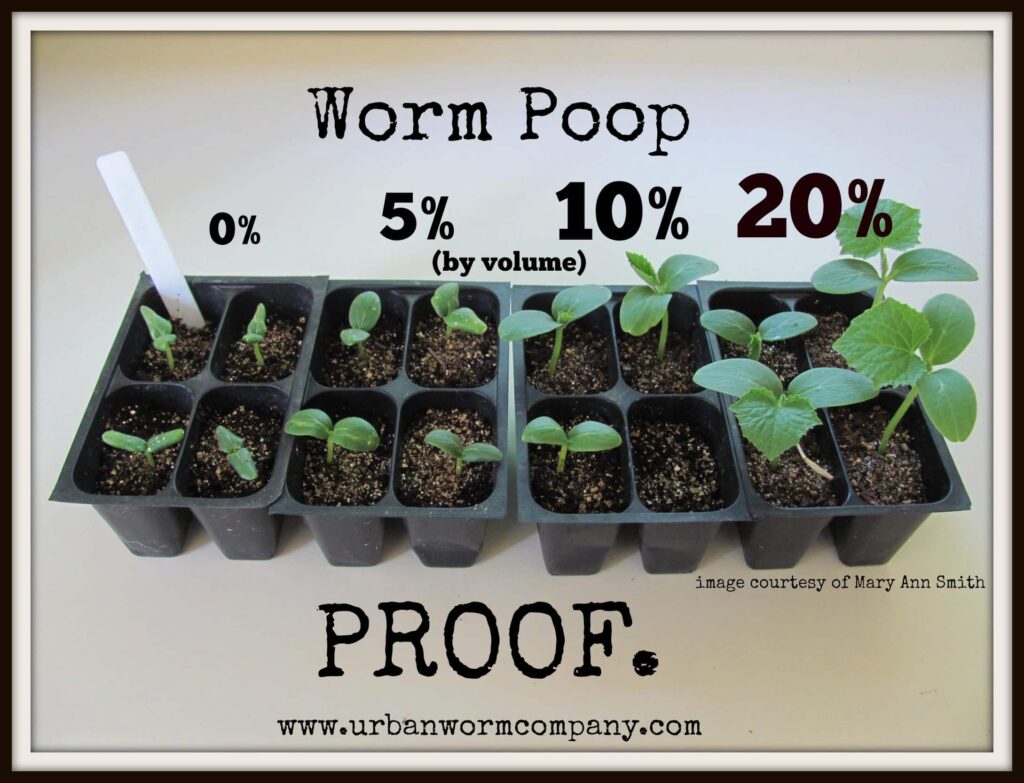
Worm Castings (Vermicast) are a great addition to any soil where you are growing a heavy feeding annually flowering plant. A simple way to add biodiversity to your soil. Worm castings are natures alternative to chemical fertilisers. Independent tests have achieved 145% increase in plant growth. Using just 20% Worm castings in a potting medium with no other fertiliser added promote strong healthy plants that tend to be more disease resistant.
Frequently referred to as “black gold” and “the superfood of plants”, worm castings contain minerals, nutrients and active biology that are proven to improve soil structure and aid in plant and root growth.
Recommended Usage:
- For Compost Tea use 2 cups of worm castings to 20 litres of water. Add one tablespoon of molasses, bubble with high volume air pump for 36hrs.
- For Soil Media use 15-20% worm castings.
- For Top Dressing use enough to make a 25-50mm thick layer at any time.
Where to Use Worm Castings
Castings are an excellent soil amendment for virtually any plant type or grow system, including:
- Vegetables, fruits, and herbs
- Gardens and raised gardens
- Lawns, trees, shrubs, and vines
- Perennials and Annuals
- Potted plants and hanging baskets
Worm castings will help anything with roots grow!
Worm castings can also be used with any type of planting – from new seedling plantings or established plants and flowers to lawns, trees, and shrubs.
Basically, if it has a root system, lives in the soil, and grows, it will love worm castings!
How to Use Worm Castings
Worm castings can be used with existing potted plants, gardens, and lawns, or with new plantings and seedlings.
The application and use will differ, though, with castings being mixed into the potting medium for new plantings and placed on the surface and gently kneaded into the soil for existing plants.
Here’s a breakdown for using castings for virtually any home horticulture or garden project:
| Type | Application & Amount to Use | Frequency |
| Existing Vegetables, Perennials, & Annual Flowers | Spread 1-2 inches of castings on the soil above the plants’ root systems. Gently work the castings into the soil and water lightly. | 2-3 times per year in early spring, early summer, & early fall |
| Existing Potted Plants, House Plants, & Hanging baskets | Sprinkle ½ to 1 inch of castings on the top of the soil. Gently knead the castings into the soil and water lightly. | Every 2-3 months |
| Existing Trees, Shrubs, Vines, & Roses | Apply a 2-3 inch layer of castings around the base of the plant and root system. Gently knead or rake into soil and water lightly. | 2-3 times per year in early spring, summer, and fall |
| Existing Gardens & Flower Beds | Apply a 1-2 inch layer of castings (~5 pounds per 10 square feet) to the garden or flower area. Knead or rake into the soil where possible and water gently. | 2-3 times per year in early spring, summer, and fall |
| New Vegetables, Perennials, & Annual Flowers | Line each seedling hole with ½ to 1 inch of castings, or each plant hole with 1 to 2 inches of castings, insert seed or plant, and cover with soil or your grow mix. If you are planting a new garden or raised bed, you can instead mix 15% to 20% (1:5 ratio) castings with your soil or favorite planting medium before seeding or planting. | Once at planting, then top dress with ½ inch of castings every 2-3 months from spring to fall. |
| New Potted Plants, House Plants, and Hanging Baskets | Use 15% to 20% (1:5 ratio) castings with your soil or favorite planting medium. | At planting, then top dress with ½ inch of castings every 2-3 months |
| New Trees, Shrubs, Vines, & Roses | Mix 15% to 20% (1:5 ratio) castings with your soil or favorite planting medium before planting. Line plant hole with mixture, insert plant roots into the mixture and cover with additional 1:5 castings to soil mixture. | At Planting |
| New Gardens & Flower Beds | Mix 15% to 20% (1:5 ratio) castings with your soil or favorite planting medium before planting. | At planting, then top dress with 1-2 inches of castings every 2-3 months |
| New & Established Lawns | Apply 20-25 pounds of castings for 100 square feet of lawn space. Water lightly. | 2-3 times per year (spring and fall) |
Leachate vs Worm Tea
| 1. Leachate – The liquid run off that settles at or below the vermicompost or worm castings. This is a form of “Seeping” | 2. Worm Tea – The end result or product of suspending worm castings for extracting in highly oxygenated water. This is a form of “Steeping” |
The liquid that drains from a vermicomposting system or “worm juice” but it’s important to realize that this is leachate that has drained down through decomposing organic matter. It’s definitely NOT the same thing as vermicompost/castings tea. It is basically vegetable ooze and has nothing to do with compost tea, worm tea, worm wee or liquid gold.
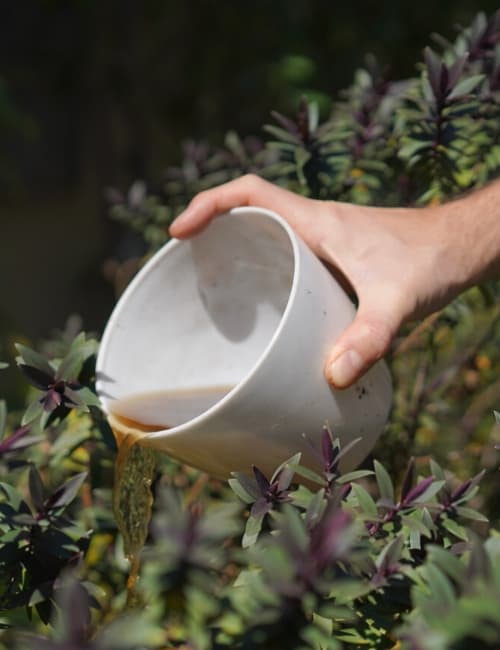
Worm Tea, also known as ‘liquid gold’, is a magical elixir that provides billions of good microbes such as fungi, and helpful, nitrogen-fixing bacteria to your plants and veggies. You don’t see these good microbes in synthetic liquid fertilisers, so nothing beats this recipe from mother nature. If you use your kitchen scraps to feed your worms you are returning all those extra nutrients into your soil in exactly the right balance as you are harvesting.
– When a system (whether stacking, single-compartment flow-through, or regular plastic tub with drain holes) DOESN’T produce leachate this shouldn’t be viewed as a bad thing. In my humble opinion this is actually what we should be aiming for! I’d much rather conserve my nutrients and produce a top notch vermicompost than be constantly collecting run-off from my systems.
– Vermicompost/castings tea is created when you submerge high quality vermicompost in water (preferably not straight from the tap) and either let it sit and steep or vigorously aerate it.
– The liquid oozing out of their worm bins is actually not that beneficial and can sometimes even harm plants. Leachate CAN be used as a liquid “fertilizer” of sorts, but the quality will be highly variable
– Depending to a large extent on how old the system is and how well maintained it is. Liquid coming from mature vermicomposting system that has been well maintained will likely going to be much better quality than a brand new worm bin operated by someone who is not all that familiar with the fundamentals of vermicomposting.
– Because the material the liquid is draining from will be at varying levels of decompostion (and aerobicity), there can be all manner of different compounds (some of them potentially phytotoxic or worm-toxic) being added to the “tea”.
Hands down worm tea is the winner in the battle of leachate vs worm tea. So the next time you turn on the spigot and collect the juice at the bottom of your worm bin think twice about where you want to put the leachate.
You have no idea of what might be in the mysterious liquid, but you can be 100% sure of what’s in the the LIQUID GOLD.